What allegedly began as an unauthorised office in Abuja appears to have grown into a far-reaching structure, with state coordinators, zonal officials and overseas representatives before federal authorities stepped in.
According to the report, the alleged office did not merely operate with a name and physical address. It presented itself as a nationwide project, with an Executive Director and National Coordinator, a Director of National Administration, three zonal directors, coordinators across 20 states, and representatives in the United States and China.
The man listed on the organization’s website as its national coordinator was Nwabueze George, while the ICPC identified George Buchi Nwabueze as the alleged promoter of the office. The commission said he was also known by other variations of his name, including George Nathan, George Nathan Nwabueze and Prince George Buchi Nwabueze.
What makes the case more striking is that the organisation reportedly portrayed itself as a Federal Government-backed initiative focused on promoting locally made goods, supporting businesses, attracting investment and pushing Nigeria towards a production-driven economy.
Its website also claimed a long institutional history, tracing the initiative to 2006 and suggesting that it later received government recognition. However, the ICPC said the National Brands Development and Made-in-Nigeria Special Project Office was operating without presidential authorization and had allegedly been illegally allocated office space within the Office of the Secretary to the Government of the Federation.
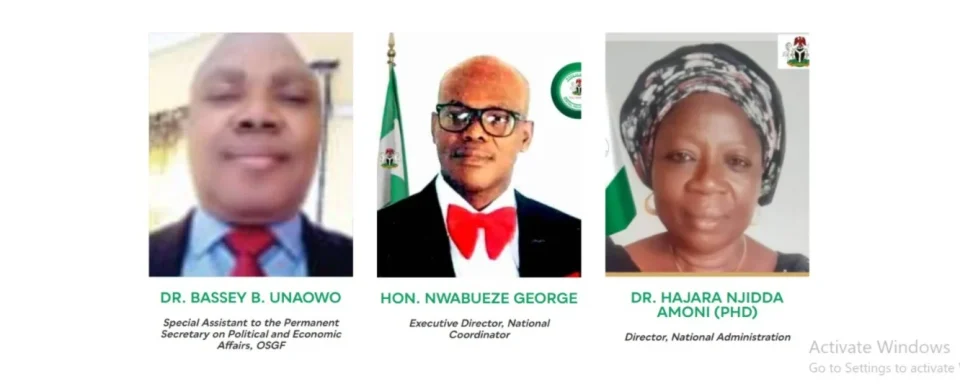
The investigation has now shifted attention from the existence of the office itself to the size of the network built around it and how an organisation alleged to be unauthorised was able to project an image of national and international reach.
President Bola Tinubu has already ordered the arrest of Nwabueze and suspended three Permanent Secretaries — M.S. Danjuma, Nadungu Gagare and Richard P. Pheelangwah — as investigations continue into suspected collaborators and the circumstances surrounding the operation of the office.
It is important to note, however, that the appearance of individuals as coordinators or representatives on the organisation’s website does not by itself establish that they were involved in wrongdoing or knew that the office allegedly lacked government approval. The report said the involvement of all those listed had not been independently confirmed.
The case is the latest to emerge from a broader ICPC investigation that had earlier uncovered other alleged fictitious government bodies. The National Brands Development and Made-in-Nigeria Special Project Office is reported to be the fourth such body identified in the ongoing probe.
As investigators dig deeper, the bigger question is no longer just how a purported government office was created, but how it allegedly developed a network stretching across 20 Nigerian states and into the United States and China before coming under official scrutiny.