Wellington Jopelo
Lionel Messi has officially announced his retirement from the Argentina national team, bringing down the curtain on one of the greatest and most emotional international careers football has ever witnessed.
At 39, Messi leaves the Albiceleste after 207 appearances and 125 goals, finishing as Argentina’s most-capped player and all-time leading scorer. His final appearance came in the 2026 FIFA World Cup final against Spain on July 19, where Argentina lost 1-0 after extra time.
But Messi’s story with Argentina was never simply about numbers. It was a journey filled with extraordinary triumphs, painful defeats, criticism, tears, disappointment, redemption and, eventually, the love and respect of an entire nation.
Messi made his senior Argentina debut in 2005 and spent more than two decades wearing the famous blue and white shirt. He eventually became captain in 2011 and went on to lead his country through some of the most important moments in its modern football history.
His relationship with Argentina was not always easy. For years, the player who appeared almost unstoppable with Barcelona was criticised for failing to reproduce the same success with the national team. The disappointment became particularly painful after Argentina lost the 2014 World Cup final to Germany, followed by defeats in the 2015 and 2016 Copa América finals.
The heartbreak reached its peak in 2016 when Messi, devastated after another Copa América final defeat to Chile on penalties, announced his retirement from international football. It was his first retirement announcement from Argentina.
The reaction from Argentina was enormous. Fans, former players and prominent personalities pleaded with him to return, while social media campaigns were launched asking their captain to reconsider. Messi eventually reversed his decision and returned to the national team. FIFA has previously documented how the criticism surrounding him gave way to an extraordinary wave of affection from Argentine supporters after his 2016 announcement.
What followed changed everything.
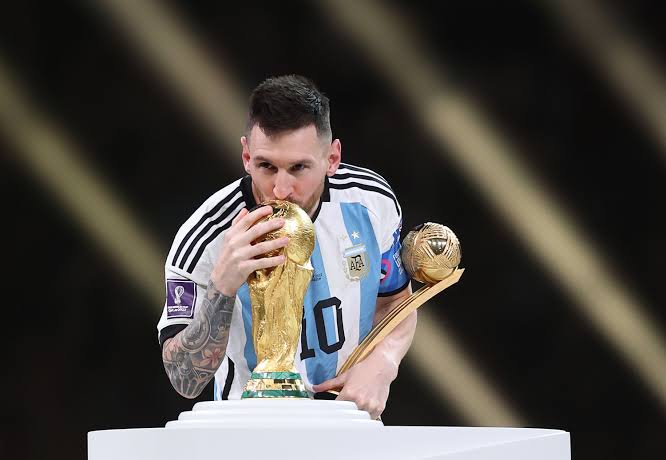
In 2021, Messi finally lifted his first major senior trophy with Argentina when he helped the country defeat Brazil in the Copa América final at the Maracanã. The victory was an emotional release for Messi and millions of Argentines who had watched him suffer years of international disappointment.
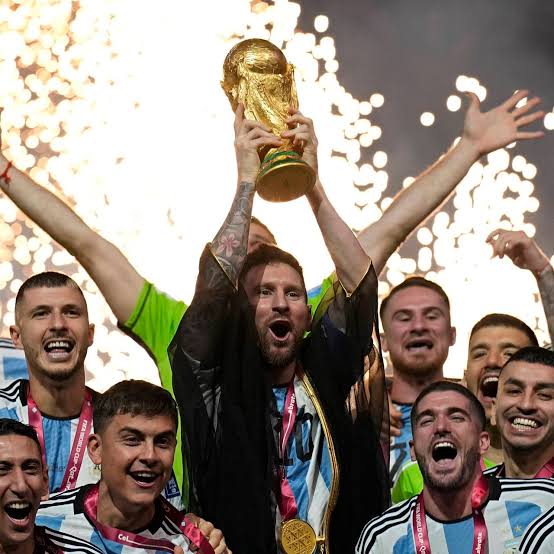
A year later came another major triumph. Argentina defeated Italy in the 2022 Finalissima, before Messi captained the country to the ultimate prize at the 2022 FIFA World Cup in Qatar.
The World Cup victory completed the biggest missing piece of Messi’s career. He scored twice in the final against France and was named the tournament’s Golden Ball winner, finally becoming a world champion with the country he had spent years trying to lead to glory.
Messi was not finished.
In 2024, he helped Argentina win another Copa América title, giving him two Copa América trophies alongside the World Cup and Finalissima. With the senior national team, he therefore leaves with four major titles: Copa América 2021, Finalissima 2022, World Cup 2022 and Copa América 2024.
His achievements with Argentina also extend beyond the senior team. Messi won the FIFA Under-20 World Cup in 2005 and an Olympic gold medal with Argentina in 2008.
His individual records are equally remarkable. Messi leaves Argentina with 125 goals, 207 appearances and 68 assists, while also holding the country’s records for appearances, goals and assists. He represented Argentina at six World Cups and scored 21 World Cup goals, while becoming one of the competition’s most decorated and influential players.
Even at an age when many players have already left international football, Messi continued to produce unforgettable moments. At the 2026 World Cup, he scored a hat-trick against Algeria and continued rewriting World Cup records, including becoming the first player to score in seven consecutive World Cup appearances.
His final World Cup campaign ended in heartbreak rather than another trophy. Argentina reached the final for the second consecutive tournament but fell to Spain, denying Messi the fairytale ending of lifting the World Cup for a second time.
Messi’s decision to retire also comes after a deeply emotional period in his personal life. His father, Jorge Messi, died on August 8, 2026, at the age of 68. Messi had already decided shortly after the World Cup final that he would step away, but the loss of his father further reinforced the decision.
In announcing his retirement on August 31, Messi made it clear that leaving Argentina was painful. He reflected on everything he had given to the national team and acknowledged that a new generation of players is now ready to take responsibility.
This is therefore the second time Messi has announced his retirement from Argentina. But unlike 2016, when he returned after public pressure, this farewell comes after he has achieved almost everything he could have dreamed of with the national team.
He leaves not as the player who was once questioned for not winning with Argentina, but as the captain who eventually delivered the Copa América, Finalissima and World Cup, becoming one of the most beloved figures in the country’s football history.
The love between Messi and Argentina has also undergone a remarkable transformation. The player who once struggled to convince some supporters that he belonged in the same conversation as the country’s greatest football heroes eventually became an unquestionable national icon.
The Argentine Football Association has repeatedly described Messi as the team’s captain, symbol and emotional leader, while acknowledging the extraordinary connection he developed with supporters. Following the 2026 World Cup final, the AFA also recognised Messi as the team’s footballing and emotional reference point.
And as news of his retirement spread, social media erupted with tributes from football fans around the world, with supporters thanking the Argentine legend for the memories, the trophies, the goals, the assists, the celebrations and, above all, the beautiful football he gave to generations.
FIFA also joined the tributes, thanking Messi following his international retirement, while countless fans and football accounts flooded social platforms with messages celebrating his contribution to the game.
For Argentina, this is more than the retirement of a footballer.
It is the closing of a chapter that began with a young Rosario boy dreaming of representing his country and ended with that boy becoming Argentina’s most-capped player, highest goalscorer, World Cup champion, two-time Copa América champion and one of the greatest players the national team has ever produced.
Thank you, Leo. Thank you for the beautiful game. Thank you for the tears, the joy, the impossible goals, the trophies and the memories. Argentina may now have to move forward without its No. 10, but the love and respect Messi earned in the blue and white shirt will remain long after his final whistle.