Wellington Jopelo
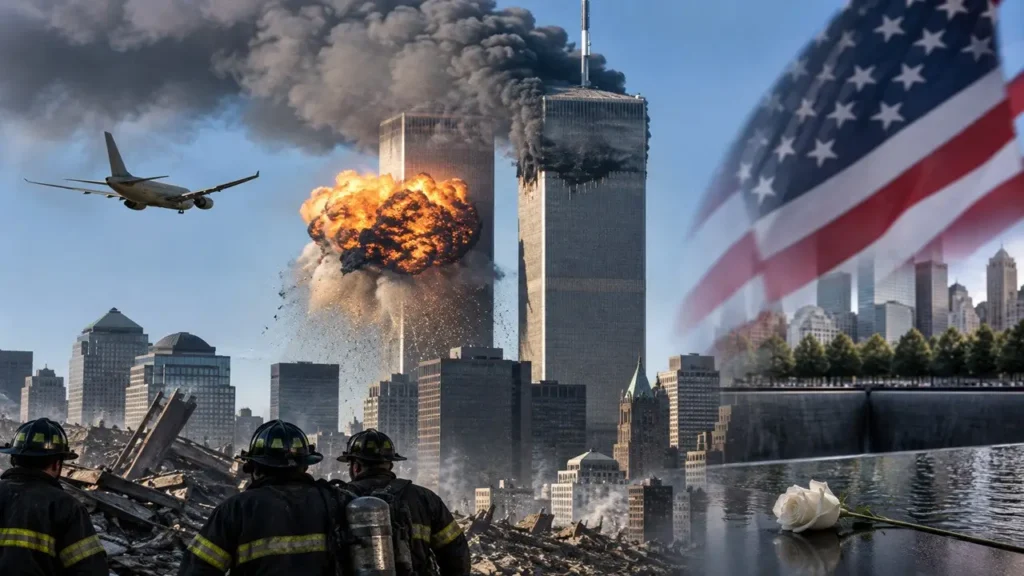
Twenty-five years after the September 11, 2001 terrorist attacks, the United States is once again remembering one of the darkest days in its history. The 25th anniversary is being marked across New York, Washington, D.C., and Pennsylvania, with families reading the names of victims, observing moments of silence and honouring the first responders and others who lost their lives. President Donald Trump is taking part in this year’s commemoration at the Pentagon, while Vice President JD Vance is attending the New York ceremony.
The attacks killed 2,977 people, excluding the 19 hijackers, with victims from 90 countries. A total of 2,753 people died in New York, 184 were killed at the Pentagon and 40 people died aboard United Airlines Flight 93, which crashed in Pennsylvania after passengers attempted to take control of the aircraft from the hijackers.
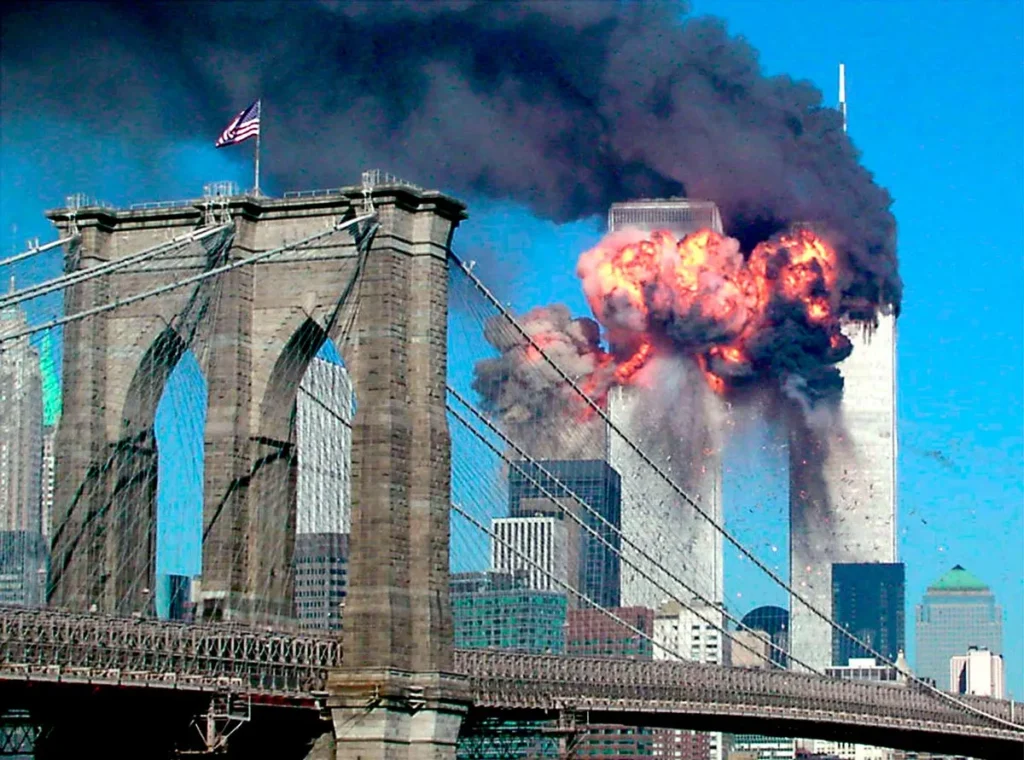
The attacks began on the morning of September 11, 2001, when 19 al-Qaeda terrorists hijacked four commercial aircraft. American Airlines Flight 11 struck the North Tower of the World Trade Center at 8:46 a.m., followed by United Airlines Flight 175 hitting the South Tower at 9:03 a.m. American Airlines Flight 77 crashed into the Pentagon at 9:37 a.m., while United Airlines Flight 93 crashed near Shanksville, Pennsylvania, at 10:03 a.m.
The terrorist operation was carried out by al-Qaeda, the organisation founded by Osama bin Laden. The 19 hijackers included 15 Saudis, two citizens of the United Arab Emirates, one Egyptian and one Lebanese. Mohamed Atta was the lead hijacker, while Khalid Sheikh Mohammed was among the senior figures involved in planning the operation.
The human cost was particularly devastating among emergency responders. 343 New York City firefighters, 23 NYPD officers and 37 Port Authority police officers were killed while responding to the attacks. Thousands of other first responders and survivors later suffered illnesses linked to exposure to the toxic dust and debris at Ground Zero.
This year’s anniversary has also brought renewed attention from President Trump. Before the main commemorations, Trump attended an event at the White House Ellipse featuring a 21-foot steel beam recovered from the South Tower. He described the victims as “precious souls” and said the anniversary should renew America’s determination never to forget what happened. He also posthumously presented the Presidential Medal of Freedom to Welles Crowther, the financial worker remembered as the “Man in the Red Bandana” for helping people escape the South Tower.
Trump also announced that the U.S. Coast Guard would commission a new Fast Response Cutter in honour of Jeffrey Palazzo, an FDNY firefighter and Coast Guard reservist who was among those killed at the World Trade Center. The President used the remembrance to emphasise American resilience and the sacrifices made by ordinary citizens and first responders.
The 9/11 attacks fundamentally changed America’s foreign policy. President George W. Bush declared a global War on Terror, and the United States invaded Afghanistan in October 2001 to remove the Taliban government that had provided sanctuary to al-Qaeda. NATO invoked Article 5 for the first time in its history, treating the attack on America as an attack against the entire alliance.
The consequences later extended to Iraq. In 2003, the United States invaded Iraq even though Iraq was not responsible for the 9/11 attacks. The invasion became part of the wider post-9/11 American strategy in the Middle East and led to years of conflict, instability and debate over the consequences of America’s military response.
The attacks also transformed security inside the United States. Washington created the Department of Homeland Security, strengthened intelligence cooperation and introduced major changes to airport security through the Transportation Security Administration. The USA PATRIOT Act expanded government surveillance and investigative powers, producing an enduring debate over national security, privacy and civil liberties.
American diplomacy also changed. Counterterrorism became a major part of U.S. foreign policy, military cooperation and intelligence-sharing. Washington developed closer security relationships with countries willing to assist its campaign against al-Qaeda and other extremist organisations, while relations with several countries in the Middle East and South Asia became increasingly shaped by America’s security priorities.
Osama bin Laden was eventually killed by U.S. forces in Pakistan in May 2011, almost 10 years after the attacks. His death was a major milestone for the American counterterrorism campaign, but it did not end al-Qaeda or the wider extremist threat. The organisation became more decentralised, with affiliates emerging in different regions of the world.
The United States also paid a huge price for the wars that followed 9/11. Afghanistan became America’s longest war, while the Iraq conflict produced years of instability and contributed to the environment in which other extremist organisations, including ISIS, were able to grow.
Twenty-five years later, the legacy of September 11 extends far beyond the 2,977 lives lost that morning. The attacks changed how Americans travel, how intelligence agencies operate, how governments approach terrorism and how Washington conducts foreign policy.
The anniversary is therefore both a day of mourning and a moment of reflection. America responded to 9/11 with military action, new alliances, stronger intelligence systems and sweeping domestic security measures, but those decisions also produced wars, enormous financial costs and continuing debates over civil liberties and America’s role in the world.
For a generation of Americans, September 11 remains a defining moment. For the rest of the world, it remains a reminder of how a single day can reshape international relations, security policies and global politics for decades. Twenty-five years later, the names of those who died continue to be remembered, while the consequences of that morning remain visible in America’s relationship with the world.