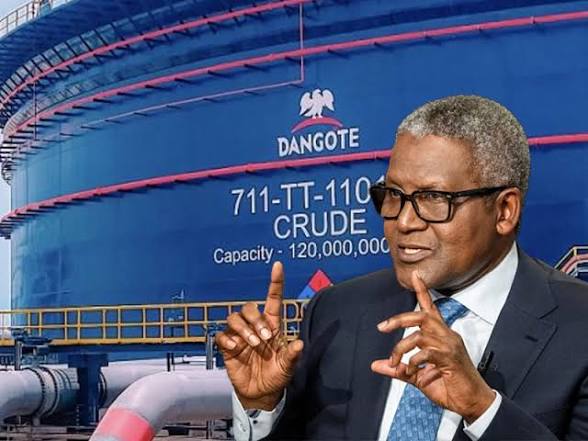
Hearing in the ongoing legal dispute between Dangote Petroleum Refinery and the Federal Government over fuel import licences was on Monday stalled after the presiding judge was reportedly absent from court, delaying proceedings in the high-profile case.
The matter, which is before the Federal High Court, centres on a suit filed by Dangote Refinery challenging the continued issuance of fuel import licences to marketers and the government’s downstream regulatory agencies.
The refinery is arguing that the licences allegedly undermine its operations and go against provisions of the Petroleum Industry Act (PIA), which it claims prioritises local refining and allows imports only when domestic supply is insufficient.
On the other hand, petroleum marketers and state-linked oil institutions have maintained that the import licences remain legal instruments necessary to ensure steady fuel supply across the country, especially given Nigeria’s fluctuating refining capacity and demand pressures.
The case has become one of the most closely watched industry disputes in Nigeria’s energy sector, involving key stakeholders including regulators, marketers and the state oil company.
Reports indicate that the absence of the judge prevented the continuation of scheduled hearing activities, forcing the court to adjourn the matter to a later date for further proceedings.
The legal battle forms part of a wider tension in the downstream petroleum sector following the commencement of operations at the massive Dangote Refinery, which is expected to significantly reduce Nigeria’s reliance on imported fuel once fully operational.
The refinery, one of the largest in the world, has repeatedly maintained that a reduction in fuel imports is necessary to protect local refining capacity and stabilize the domestic petroleum market.
However, regulators and marketers insist that fuel imports still play a critical role in maintaining supply stability, especially during transition periods as domestic production continues to scale up.
The case is expected to resume once a new date is fixed, with industry observers watching closely as the outcome could shape the future structure of Nigeria’s fuel import and refining system.