By Wellington Jopelo
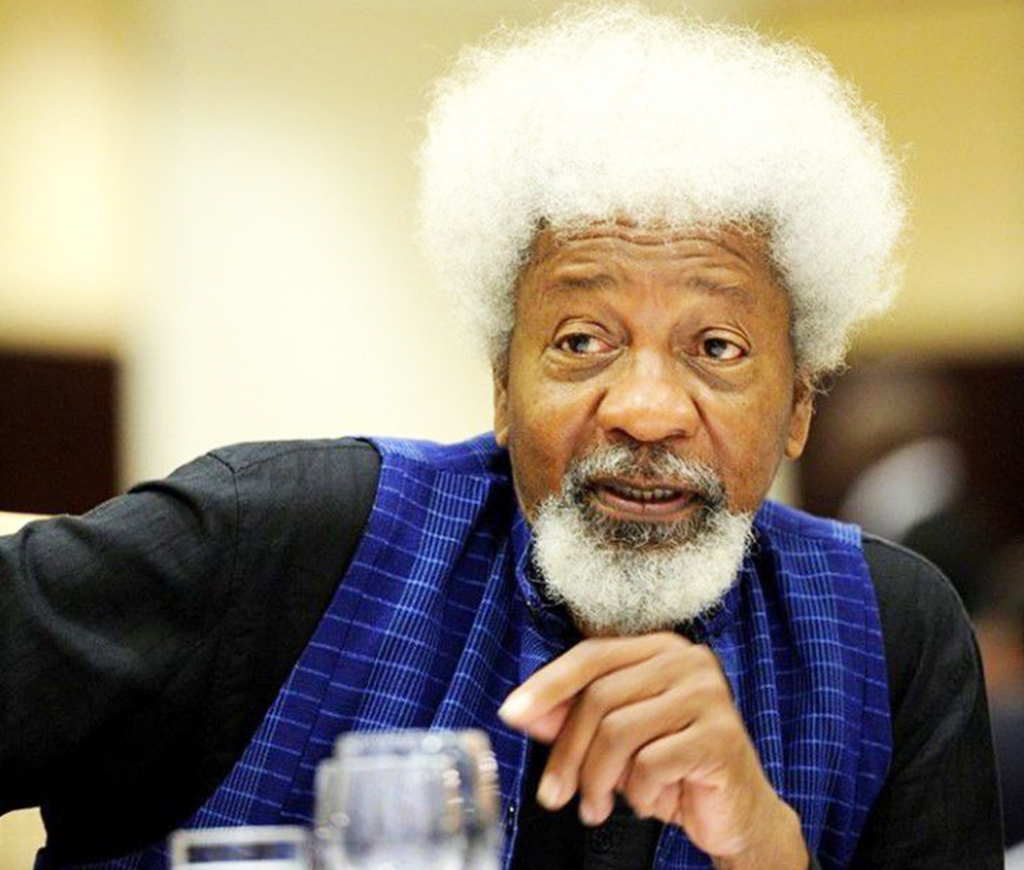
Professor Wole Soyinka has advised President Bola Tinubu to rethink how state security is being used, especially when it comes to protecting individuals close to the Presidency. He said this while speaking at the Wole Soyinka Centre for Investigative Journalism Awards in Lagos on Tuesday.
Soyinka explained that he recently witnessed something in Lagos that left him shocked. He said he was in his hotel room in Ikoyi when he saw what he described as an unusually large number of armed security officers escorting a young man. According to him, the size of the escort looked like “an army that could take over a small country.”
He later found out that the person surrounded by the heavy security team was Seyi Tinubu, the President’s son. Soyinka said the situation worried him enough that he immediately tried to reach the National Security Adviser, Nuhu Ribadu. “I was so astonished that I started looking for the national security adviser… I said do you mean that a child of the head of state goes around with an army for his protection?” he said.
Soyinka added that he made further enquiries and was told that the large escort was not a one-off incident. “Apparently this is how this young man goes around with his battalion, his heavy armed soldiers,” he said.
He stressed that children of leaders must understand their position and should not carry the weight of state power simply because of their family connection. “Children must understand their place. They are not elected leaders,” he said.
Soyinka also urged the President to reduce the number of security personnel attached to Seyi, saying the country needs those officers in places facing real threats. He joked that if a serious insurgency were to occur, maybe the President could ask Seyi “to go and handle it” since he moves around with such a large security team.
Behind the humour, he warned that dedicating so many armed officers to one individual is unfair in a country dealing with kidnappings, attacks, and insecurity. He said security resources must match the needs of the nation, not personal privilege.