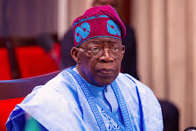
President Bola Tinubu has renewed his administration’s commitment to restoring Nigeria’s refineries to full operation, condemning years of poor management and wasteful spending that failed to deliver functional facilities despite huge investments.
Tinubu made the pledge during a meeting with the leadership of the Nigeria Union of Petroleum and Natural Gas Workers at the Presidential Villa in Abuja, where concerns were raised over the prolonged delay in bringing the country’s moribund refineries back into operation.
The President assured the petroleum workers that the facilities would work again but stressed that his administration was not interested in maintaining refineries merely for appearances. According to him, the new approach would focus on productivity and efficiency rather than the waste associated with previous operations.
Tinubu said the planned revival is part of a broader restructuring of the Nigerian economy, as the government seeks to build a more sustainable system across critical sectors.
During the meeting, the NUPENG leadership welcomed the government’s efforts to return the refineries to operation and also called for urgent attention to the ageing depot network of the Nigerian Pipelines and Storage Company.
The union urged the Federal Government to consider allowing private investors to manage the decaying depots under an equity arrangement, arguing that the facilities require fresh investment and better management.
NUPENG also used the meeting to raise other national concerns, including the need for state governments to comply with the Supreme Court judgment on local government financial autonomy.
Tinubu’s latest assurance places renewed attention on the future of Nigeria’s state-owned refineries, which have consumed huge public resources over the years despite long periods of inactivity.
The President’s position is that the next phase of refinery operations must produce measurable results, with efficiency and output taking priority over the costly pattern of maintaining facilities that fail to deliver for the Nigerian economy.