By Wellington Jopelo
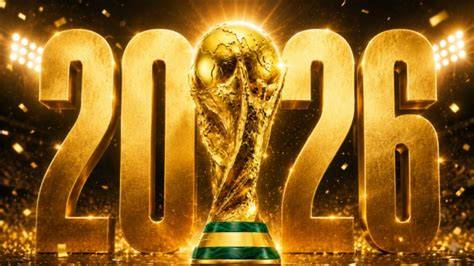
The FIFA World Cup 2026 is set to be one of the biggest sporting events in history, bringing together nations from around the world for a month-long football competition that will stretch across three host countries. It is expected to deliver intense matches, new football stars, and possibly a shift in global dominance as teams prepare for the expanded format and increased pressure on the world stage.
The tournament will begin on June 11, 2026, and end on July 19, 2026, with matches hosted across the United States, Canada, and Mexico. This will be the first time in World Cup history that three countries will jointly host the competition, and also the first time the tournament will feature 48 national teams, expanded from the traditional 32-team format. This change will increase the number of matches and give more nations a chance to participate on football’s biggest platform.
The FIFA World Cup itself has a long and rich history dating back to 1930, when the first edition was held in Uruguay. Only 13 teams participated then, and Uruguay went on to become the first-ever champions after defeating Argentina in the final. Over the decades, the tournament has grown into the most watched sporting event in the world, producing legendary moments such as Brazil’s dominance with Pelé in 1970, Germany’s consistent success across generations, Spain’s tactical revolution in 2010, and Argentina’s dramatic triumph in 2022 led by Lionel Messi. The competition is held every four years and has become a stage where football history is written.
The 2026 edition stands out not only because of its expanded format but also due to its structure and scale. With more teams participating, there will be a new Round of 32 stage before the traditional knockout rounds. This means more opportunities for underdog nations to progress further in the competition, and more matches that could produce unexpected results. The tournament will also feature 104 matches in total, making it the largest World Cup ever organized.
When it comes to favourites, several nations are already being considered strong contenders based on squad quality, experience, and recent performances. France remains one of the most balanced teams in world football, with strength in both attack and defence. Argentina, the defending champions, will aim to continue their golden era even as they transition into a new generation of players. Brazil continues to be a constant threat due to their attacking depth and football tradition, while England is seen as a serious challenger with a young and talented squad capable of going all the way. Teams like Spain and Germany are also expected to improve significantly as their rebuilding projects mature ahead of the tournament.
The tournament will also showcase a new generation of football stars who could define the future of the sport. Players such as Kylian Mbappé of France, already a proven World Cup performer, will likely be one of the main attractions. England’s Jude Bellingham has emerged as one of the most complete midfielders in world football, combining leadership, skill, and maturity beyond his age. Brazil’s Vinícius Júnior brings pace and creativity that can change matches instantly, while Spain’s young talent Lamine Yamal is expected to step into global spotlight if his development continues. Germany’s Jamal Musiala is also widely regarded as one of the most exciting attacking midfielders of his generation.
Beyond the competition itself, the 2026 World Cup carries major global significance. The expanded format allows more countries from Africa, Asia, and smaller footballing regions to participate, increasing global representation and giving emerging football nations valuable experience. Economically, the tournament is expected to generate massive tourism revenue for the host countries while also boosting global interest in football across North America.
In conclusion, the FIFA World Cup 2026 is more than just a football tournament. It represents a new era of expansion, inclusion, and global competition. With new formats, rising stars, and traditional powerhouses all preparing for battle, the tournament is expected to deliver unforgettable moments that will shape the next generation of football history. As the kickoff date approaches, anticipation continues to build over which nation will rise above the rest and claim football’s most prestigious trophy.